Location: Presented in person in EER 3.646 and via Zoom 828.685.7838.
Sponsor: Department of Energy (DOE) Energy Frontier Research Center (EFRC) Materials for Water and Energy Systems (M-WET)
Title: Morphology-Transport Relationships and Accelerated Membrane Design of Composite Reverse Osmosis Membranes
Abstract
Membranes have become ubiquitous in water treatment and desalination, with the exception of high-salinity brines that are out of the pressure range of reverse osmosis (RO). Our long-term goal is to extend the range of RO to enable the energy-efficient desalination of essentially any aqueous solution, even ones with high salinities and/or extreme pH (e.g., acids and bases). To achieve this goal, we need to design better membranes, building on the composite membrane structure of the polyamide thin-film composite membranes that dominate RO. These membranes comprise three layers: a polyamide nanofilm selective layer, a porous polymeric support, and a non- woven fiber backing. This talk will introduce some of our work in this area, through the lens of composite membrane structure.
First, I will introduce key background theory of the simple (but useful) resistance-in-series and equivalent-circuit models. Second, I will cover our study on compaction of RO membranes at up to 150 bar, which is twice the pressure of seawater RO, showing how the equivalent-circuit model points to interlayer resistance as a key mechanism for permeability loss at high pressures. Third, I will show how a high-permeability gutter layer helps to not just mitigate this permeability loss at high pressures, but also enable quantification of the “true permeability” of polyamide nanofilms. Last, I will introduce our automated system for porous membrane synthesis, including how we are using this system as a “self-driving lab” for closed-loop automated development of compression-resistant porous supports for high-pressure RO.
Bio
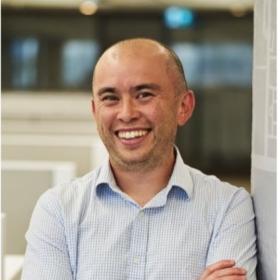
Jay Werber is an Assistant Professor in the Department of Chemical Engineering & Applied Chemistry at the University of Toronto (UofT), having joined in 2021.
He is the principal investigator of the Advanced Membranes Lab, which focuses on the development of membrane materials and processes to decarbonize industrial separations. Applications of interest in his group include brine desalination, critical metal production, production of bioderived chemicals and products, and atmospheric carbon dioxide removal. Jay is a faculty advisor of the polymers self-driving lab facility in University of Toronto’s Acceleration Consortium, with his group also building self-driving labs for automated, closed-loop development of membrane materials. Jay received a B.S. in chemical engineering from Washington University in St. Louis, after which he spent four years designing industrial protein separation processes at the biopharmaceutical company Genentech. He then pursued PhD studies in membrane science and desalination at Yale University, followed by postdoctoral research in polymer chemistry at the University of Minnesota. Jay was a recipient of the Young Membrane Scientist award from the North American Membrane Society, the Connaught New Researcher Award, and the Ontario Early Career Researcher Award.